What you really want to know
If you’re reading this, you’re probably asking one or more of these: Which whitening method works? Is it safe? How long will the results last? What should I expect afterward? This guide answers those questions first and plainly—so you can decide confidently and protect your smile. It explains the benefits, the risks, how results are maintained, and a quick self-check to help you match your goals to the right approach. The information below is grounded in dental research and professional guidance so you can weigh options with real facts, not just marketing.
Quick snapshot: What’s happening in the world of whitening
- Teeth whitening is one of the most commonly requested cosmetic dental services and a major reason people seek aesthetic dental care.
- The global teeth-whitening market continues to grow as more people seek convenient and at-home options; industry reports project significant market growth over the next several years.
How whitening works — the basics
Most whitening products use hydrogen peroxide or carbamide peroxide. These oxidizing agents break down colored compounds (chromogens) in and on the tooth, making teeth look lighter. Treatments range from mild (whitening toothpaste that polishes away surface stains) to high-concentration office procedures supervised by a dentist. The same chemistry explains why some methods act faster but also carry a higher chance of temporary side effects.
Benefits — what whitening can reasonably deliver
- Improved appearance and confidence: Many people report feeling more confident after whitening (why it’s a popular cosmetic choice).
- Quick, non-invasive change: In-office procedures can produce noticeable shade changes in one visit; take-home kits offer gradual improvement.
- Flexible options for budgets & schedules: From inexpensive OTC products to dentist-supervised take-home kits and in-office whitening, there’s usually a path that fits your priorities.
Risks & downsides — what to watch for
Whitening is generally safe when used appropriately, but it isn’t risk-free:
1. Tooth sensitivity
- Sensitivity is the most common side effect. Clinical studies report a wide range: many patients experience mild sensitivity, while smaller percentages report moderate to severe sensitivity lasting days to weeks. One well-cited study of home bleaching found mild sensitivity in about half of patients, moderate in ~10%, and severe in ~4% for short periods.
2. Gum or soft-tissue irritation
- If bleaching gel contacts the gums, it can cause temporary burning or irritation. Proper application and well-fitted trays reduce this risk.
3. Uneven or limited results
- Whitening affects natural tooth structure—not restorations. Crowns, veneers, and composite fillings won’t lighten, which can lead to color mismatch if restorations are visible.
4. Overuse risks
- Excessive or overly frequent bleaching can damage enamel and increase sensitivity. Follow product/dentist directions, and pause if symptoms are significant.
Comparing the main options (short and practical)
- Whitening Toothpaste — removes surface stains; mild, low cost; minimal risk but limited effect.
- OTC Strips/Gels — moderate results for extrinsic stains; risk of sensitivity and uneven coverage.
- Store Trays (non-custom) — better coverage than strips but poor fit can cause gel leakage and gum irritation.
- Dentist-Supervised Take-Home Trays — custom trays + prescription gel: safer, more even results, lower sensitivity risk than OTC at similar strengths.
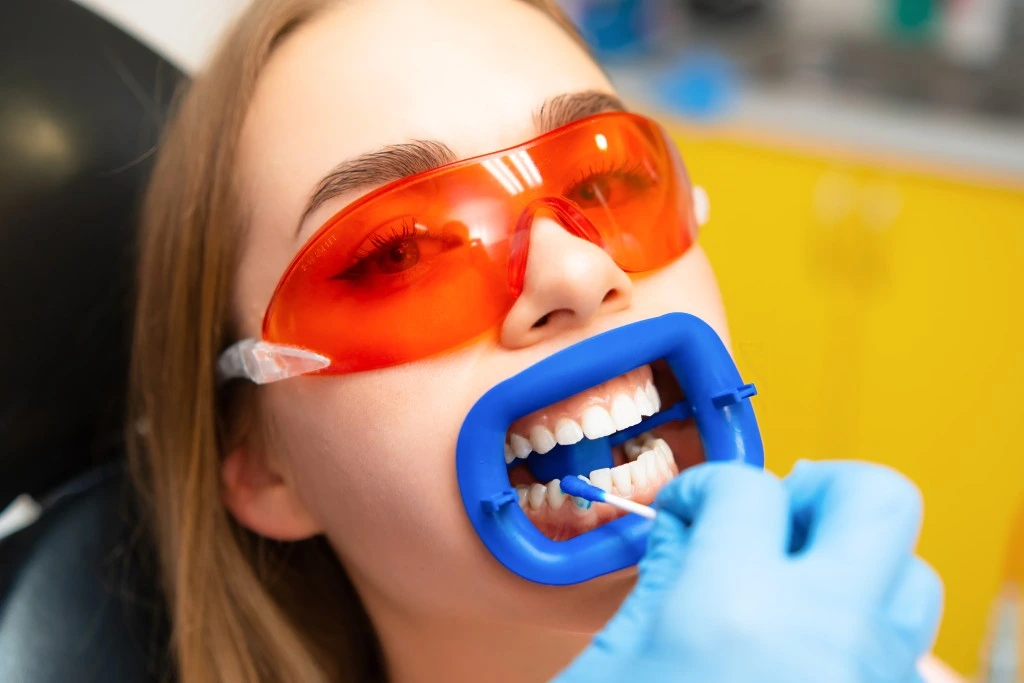
- In-Office Whitening — fastest and most dramatic shade changes under professional supervision; higher immediate cost and short-term sensitivity possible.
A practical risk-reduction checklist (before you whiten)
- Get a dental exam to check for cavities, gum disease, or worn enamel—these should be treated first.
- Ask whether you have restorations (crowns, veneers) that won’t whiten. Plan for matching restorations if needed.
- If you have thin enamel, recession, exposed roots, or active sensitivity, discuss gentler or alternative cosmetic options.
- Consider a dentist-supervised approach if you have concerns about sensitivity or results.
How long do results last?
There’s no fixed number—results vary by lifestyle. Generally:
- Expect visible improvement immediately after treatment (in-office) or after the recommended course (take-home kits).
- Touch-ups are commonly needed: twice-yearly cleanings and occasional at-home maintenance (e.g., touch-up gel or whitening toothpaste) can keep results for months to years, depending on diet, smoking, and oral hygiene.
Maintenance plan — a simple, realistic 6-month strategy
- Day 0: Complete whitening as directed (in-office or take-home).
- Weeks 1–2: Use desensitizing toothpaste if recommended; avoid highly acidic or staining foods for 48–72 hours.
- Months 1–6: Brush twice daily, floss daily, and get a professional cleaning at 6 months.
- Month 6+: Re-evaluate staining; consider a single night of touch-up gel in custom trays or an OTC touch-up strip as advised.
This schedule balances results with long-term enamel health.
“Think out of the box” — quick self-assessment (3 questions)
Answer yes/no. More “yes” answers tilt toward a dentist-supervised solution.
- Do you have visible crowns, veneers, or large fillings in your smile? (Yes → see dentist)
- Do you have a history of tooth sensitivity or gum recession? (Yes → professional guidance recommended)
- Do you want results quickly (days) rather than gradually? (Yes → in-office option)
If you answered “yes” to 1 or 2, talk to a dental professional first; whitening may require adjustment or different solutions.
Common myths (quick bust)
- Myth: Whitening makes enamel thinner.
Fact: When used correctly, peroxide whitening doesn’t permanently thin enamel; overuse and abrasive methods can cause damage. - Myth: Whitening works the same on all teeth.
Fact: Effectiveness depends on stain type—extrinsic (surface) stains respond better than intrinsic discolouration (e.g., tetracycline staining), which may need veneers.
Key industry numbers you can rely on
- About 65% of U.S. adults aged 18–64 had a dental visit in the past year (important because a dental check is the safest starting point before whitening).
- Clinical research shows many patients experience mild sensitivity during or shortly after home whitening; smaller percentages report moderate to severe short-term sensitivity. Typical findings: mild sensitivity in ~50% of participants; moderate in ~10%; severe in ~4% in some studies.
- Professional and market analyses indicate steady growth in demand for whitening products and services—helpful if you’re deciding between readily available OTC options and dentist-supervised care.
Short FAQ
Will whitening hurt my fillings or crowns?
No—restorations won’t be damaged, but they also won’t change color. You may later consider replacing visible restorations to match your new shade.
Can I whiten while pregnant or breastfeeding?
Most dentists recommend postponing elective whitening during pregnancy or breastfeeding as a precaution—ask your provider.
If sensitivity appears, what helps?
Stop or reduce use, switch to desensitizing toothpaste (potassium nitrate/fluoride), and consult your dentist for a supervised plan.
How to move forward
Whitening can be safe and effective, but results, risks, and maintenance vary. Start with a dental check, define your goals (gradual vs. fast; low cost vs. long-lasting), and select the option that balances results with long-term oral health. When in doubt, a dentist’s guidance keeps the process safer and more predictable.