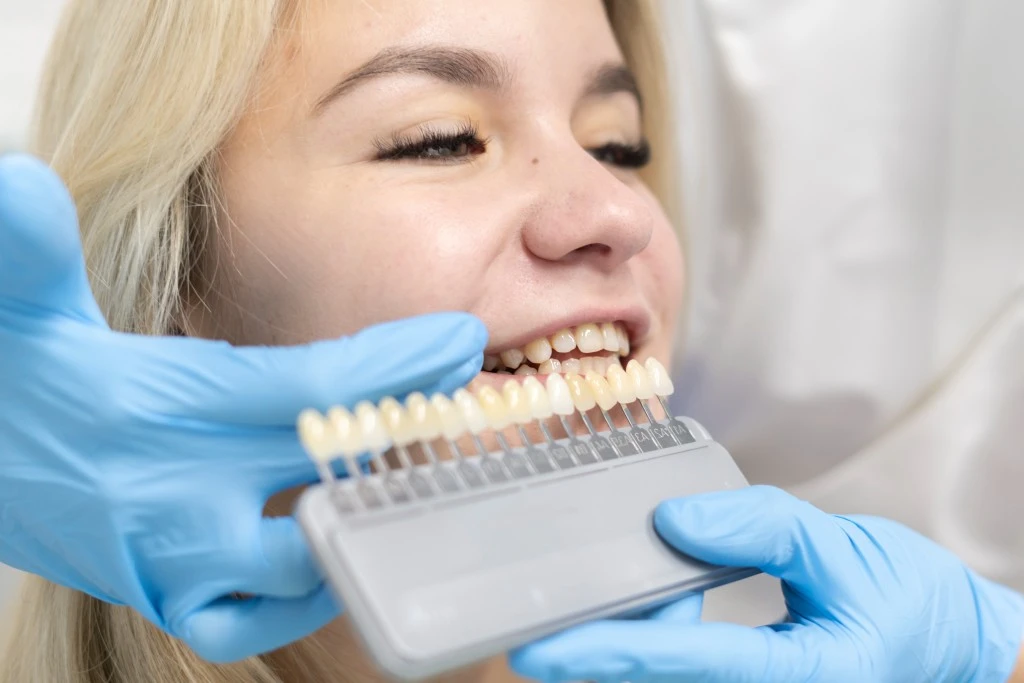
If you’re researching cosmetic dental options, you probably want answers to plain questions: Which treatment will actually fix my concern? How long does it last? What are the trade-offs, costs, and maintenance? This guide puts those user-questions first. You’ll get a clear comparison of veneers, crowns, bonding, and Invisalign—what each does, who it helps most, expected lifespan, common risks, maintenance tips, and smart ways to choose so you get the outcome you want without surprises.
Why Cosmetic Dentistry Matters Right Now
1.) Veneers
What they are: Thin shells (usually porcelain or high-strength ceramic) bonded to the front surfaces of teeth to change shape, color, size, or alignment visually. “No-prep” ultra-thin veneers are an option for select cases and reduce tooth removal, but they’re not always suitable.
Best for: Significant color change, shape correction, closing small gaps, or achieving a uniform “smile makeover.”
Procedure snapshot: Usually requires 2–3 visits—prep (enamel reduction as needed), impression or digital scan, and final bonding. Porcelain veneers are color-matched and polished for a natural look.
Longevity & evidence: High-quality studies report excellent long-term survival for porcelain laminate veneers. Systematic reviews and long-term analyses show 10-year survival rates commonly above 90%, though outcomes depend on technique, patient habits, and maintenance.
Trade-offs: Veneers are durable and aesthetic but usually require some enamel alteration (permanent in many cases). They do not whiten after placement—if you plan further whitening, do it before veneer fabrication.
2) Crowns
What they are: Full-coverage restorations that encase a tooth. Crowns restore strength and function and can also improve appearance, especially for badly broken or heavily filled teeth.
Best for: Teeth with large restorations, root-canal treated teeth, and when structural support is the main issue in addition to appearance.
Types: Porcelain-fused-to-metal (PFM), all-ceramic (zirconia, lithium disilicate), and full-metal crowns (less common cosmetically).
Longevity & evidence: Survival varies by material and tooth location. Large reviews indicate excellent 5–10+ year survival for many crown types, with metal-backed options often showing the longest survival in some studies. Expect a realistic lifespan of many years—often 10+ years—when well cared for, but individual results vary by material and bite forces.
Trade-offs: Crowns require more tooth reduction than veneers and are a restorative—not purely cosmetic—option when strength is needed.
3) Dental bonding (composite bonding)
What it is: Tooth-colored composite resin sculpted onto the tooth to repair chips, close small gaps, or change minor shape/color issues.
Best for: Quick fixes, single-visit cosmetic changes, and patients who want a reversible or lower-cost option.
Procedure snapshot: Often completed in one appointment: tooth is roughened, adhesive placed, and resin layered and polished.
Longevity & evidence: Composite restorations perform well but generally have shorter lifespans than porcelain. Reviews report annual failure rates in the 1–3% range for posterior composites, and anterior composite restorations commonly last multiple years—often 5–10 years depending on wear, habits, and material. Expect more frequent touch-ups or replacement than with porcelain veneers.
Trade-offs: Bonding is cost-effective and minimally invasive, but it stains and chips more easily than porcelain and may need replacement sooner.
4) Invisalign (clear aligners)
What it is: A system of removable, clear plastic aligners that gradually move teeth; Invisalign is a leading brand among clear aligners.
Best for: Mild to moderate crowding, spacing, and bite issues that affect smile appearance. Often used in combination with whitening or restorative work afterward.
Effectiveness & scale: Align Technology reports tens of millions of patients treated worldwide (the company reported over 19 million treated patients in recent corporate disclosures), showing how widely used clear aligners have become. Treatment time varies by case—many patients complete treatment in months to a few years depending on complexity.
Trade-offs: Clear aligners are removable (good for hygiene and eating) but require patient compliance. They are cosmetic and orthodontic—if bite correction is structural or severe, traditional braces may still be recommended.

Side-by-side at a glance
| Procedure | Ideal goal | Typical lifespan | Time to finish | Typical trade-offs |
| Veneers (porcelain) | Major aesthetic reshape/cover stains | 10+ years (many 10–15+ yrs) | Weeks (2–3 visits) | Irreversible prep; high cost |
| Crowns | Strength + appearance for damaged teeth | 10+ years (varies by material) | Weeks (2 visits) | More tooth reduction |
| Bonding (composite) | Small repairs, quick esthetic fixes | 5–10 years typical; may need touch-ups | 1 visit | Less durable; stains easier |
| Invisalign (clear aligners) | Tooth alignment & cosmetic bite improvement | Permanent if retainers used; requires follow-up | Months–2 years (case dependent) | Needs compliance; cost varies |
Risks, realistic expectations, and planning smart
- Restorations don’t change color: Porcelain and composite restorations won’t lighten with bleaching—plan whitening first if that’s part of your goal.
- Enamel loss vs reversibility: Veneers and crowns often require tooth preparation; bonding is more conservative and more reversible.
- Maintenance matters: Habits (coffee, smoking, grinding) shorten lifespans—nightguards, good hygiene, and timely repairs extend them.
- Costs and insurance: Cosmetic procedures are frequently elective and may not be covered. Expect wide price ranges depending on practice, materials, and region
How to Choose
- What’s the primary problem? (color, chips, alignment, broken tooth)
- How long do you want the result to last? (short-term vs long-term)
- How much tooth alteration are you comfortable with? (conservative → bonding; permanent → veneer/crown)
- Do you have restorations already visible that won’t change with whitening? (plan restorations after whitening)
- Are you realistic about maintenance and cost?
If you answer truthfully—especially about cosmetic goals and tolerance for ongoing care—you’ll avoid common regrets (mismatched shades, unnecessary tooth reduction, or choosing a short-term fix when a longer solution is smarter).
Final Words
If you’re weighing options for your smile, the smartest first step is a clinical consult to match your goals to a plan that balances longevity, cost, and tooth health. If you’d like a no-pressure review of your case—photos, options, and a clear timeline—Woodcreek Family Dental (Your Murphy Dentist) can explain which of these procedures (or combination of them) makes sense for your teeth. Call (972) 694-4823 or request a consultation online to discuss realistic options for your smile.