Dental Implants: Are They Really Worth It? Let’s Break It Down.
You’re missing a tooth—or maybe several. You’ve looked into your options. Crowns, bridges, dentures… and then you hear it: “dental implants are the gold standard.” But are they?
Dental implants are everywhere in modern dentistry, marketed as the most permanent and natural-looking solution for tooth loss. But what most people don’t get upfront is the full story. It’s not just about putting a fake tooth in your mouth and calling it a day. It’s surgery, it’s investment, it’s commitment.
This post cuts through the marketing fluff and gives you a real-world look at the pros and cons of dental implants, so you can make an informed decision—whether you’re missing one tooth or several.
What Are Dental Implants, Exactly?
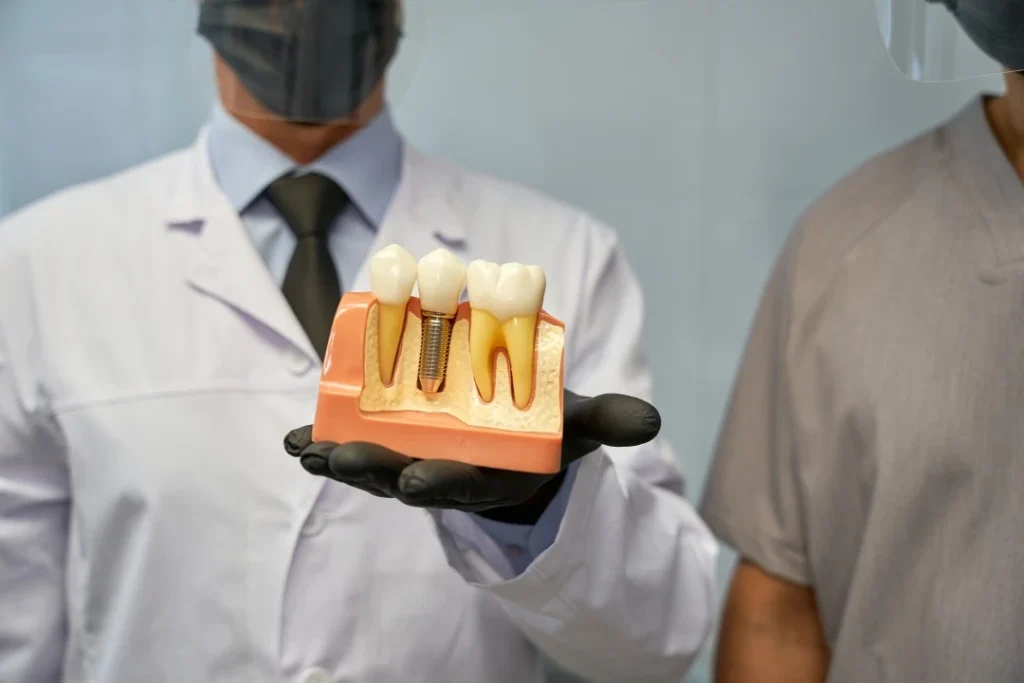
A dental implant is not the tooth itself—it’s the titanium post that gets surgically placed into your jawbone. That post acts like an artificial root, and once it fuses with your bone (a process called osseointegration), your dentist places a crown (the tooth) on top.
Implants can replace:
- A single tooth
- Multiple teeth using implant-supported bridges
- An entire arch using implant-supported dentures
Now, let’s look at why so many people are choosing this route—and the fine print you need to know before you do the same.
The Pros of Dental Implants
They Look and Feel Like Real Teeth
One of the biggest reasons people love implants? They’re virtually indistinguishable from natural teeth—both in appearance and function.
According to Aria Dental, a high-quality implant is custom-designed to match your other teeth in color, size, and alignment. You can chew, talk, and smile confidently—without that awkward “fake tooth” feeling.
“Most patients forget they even have an implant after a few weeks of healing,” notes Dr. Horiyat.
Long-Term Durability
Dental implants aren’t just a short-term fix. They’re built to last.
With proper care, implants can last 20 years or more—often a lifetime. Compare that to dentures or bridges, which may need replacing every 5–10 years, and it’s easy to see why implants are considered a smart long-term investment.
🦷 Stat: According to Third Coast Family Dental, implant success rates hover between 95–98%—especially when placed by a skilled surgeon and maintained through good hygiene.
They Preserve Jawbone Health
Here’s a fact many people don’t know: When you lose a tooth, your jawbone starts to shrink.
Without a root to stimulate the bone, it begins to deteriorate—a process called bone resorption. Over time, this can lead to:
- Facial sagging
- Difficulty with dentures
- Bite collapse
Implants are the only restorative option that replaces the tooth root, not just the crown. This helps stimulate your jaw and prevent bone loss, preserving your facial structure.
“The implant fuses with the bone, almost like it becomes part of your body,” explains Dr. Scott Froum.
They Don’t Rely on Neighboring Teeth
Unlike dental bridges, implants don’t require grinding down adjacent teeth to support them.
That means your healthy teeth stay intact, and you lower the risk of future decay or sensitivity in neighboring areas.
It’s a conservative, tooth-preserving solution in the long term.
You Can Eat What You Want (Seriously)
Say goodbye to soft-only diets. Unlike dentures, which can slip or limit your chewing strength, dental implants are anchored into the jaw and can handle steak, apples, and crunchy foods with ease.
Most patients report complete chewing function, which helps improve digestion and nutrition over time.
The Cons of Dental Implants
They’re More Expensive Upfront
There’s no sugarcoating it—dental implants can cost $3,000–$5,000 or more per tooth, depending on your location and what procedures are needed (e.g., extractions, bone grafting).
While implants often cost less in the long run due to their longevity, the initial sticker shock is real.
“You have to see it as an investment, not an expense,” says Dr. Froum. “But for some, the initial cost is a deal-breaker.”
Insurance May Not Fully Cover It
Despite their health benefits, not all dental insurance plans cover implants, or they might only cover a portion of the procedure.
If coverage is limited, you may need to explore financing, HSAs, or payment plans through your dental office.
Pro Tip: Check both your medical and dental insurance—some policies may partially cover implants if tooth loss affects overall health or is caused by trauma.
The Process Takes Time (Sometimes Months)
Implants aren’t same-day fixes. The full process typically includes:
- Consultation and imaging
- Tooth extraction (if needed)
- Bone grafting (if your jawbone is weak)
- Implant placement surgery
- Healing (3–6 months)
- Crown placement
From start to finish, you’re looking at 3 to 9 months, depending on your case. If you’re in a rush for a quick aesthetic fix, this probably isn’t your best route.
Surgical Risks and Recovery Time
Any surgery carries risks, and implant placement is no exception. While complications are rare, potential issues include:
- Infection
- Nerve damage
- Sinus problems (for upper jaw implants)
- Implant failure (especially in smokers or people with diabetes)
The recovery phase can also involve swelling, bruising, and discomfort—similar to a tooth extraction, but longer.
Not Everyone Is a Candidate
Certain health conditions can reduce implant success rates, including:
- Severe bone loss
- Uncontrolled diabetes
- Heavy smoking
- Autoimmune disorders
In those cases, bone grafting or alternative treatments like bridges or snap-in dentures may be recommended.
Who Is the Ideal Candidate?
You’re likely a good candidate for dental implants if you:
- Are missing one or more teeth
- Have a healthy jawbone or are willing to get grafting
- Are in good overall health
- Don’t smoke (or are willing to quit)
- Want a long-term solution instead of a quick fix
Real Talk: Are Dental Implants Worth It?
Here’s how to think about it:
- If you want the closest thing to a natural tooth, and can handle the time and cost—implants are the best option.
- If you need something fast, temporary, or low-cost, dentures or bridges may suit you better.
Ultimately, implants are a lifestyle decision as much as a medical one. They offer freedom, confidence, and stability—but only if you’re ready for the commitment.
Final Word: Trust Your Smile to the Right Expert
Choosing implants is one thing. Choosing the right dentist or specialist? Even more important.
Look for a provider who:
- Has extensive implant experience
- Uses digital imaging and guided surgery
- Provides transparent cost breakdowns
- Offers personalized treatment plans
- Doesn’t pressure you into quick decisions